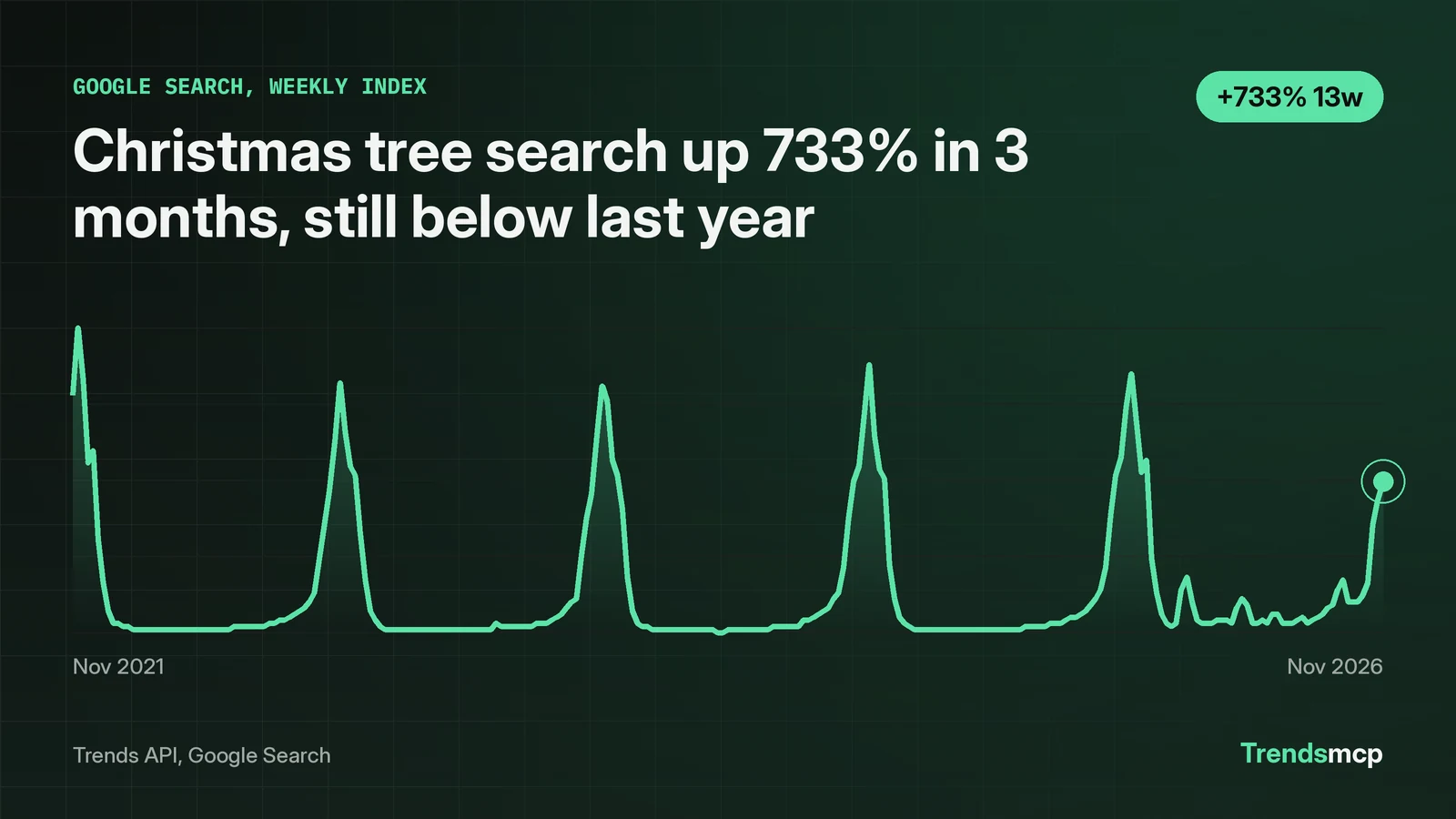
Seasonal query planning is a short routine: pick the terms, pull two growth windows for each, and set a check date before the season starts. The 3-month window shows the ramp. The 12-month window compares the term against the same week a year ago. Five seasonal terms pulled from the Trends API on November 24, 2026 put the method to work. Christmas tree search rose 733% in three months. The index read 6 on August 22 and 50 by November 21, yet sits 13.79% below the same week a year ago, when it read 58. The ramp is real and the level is soft. A plan built on either number alone gets the season wrong.
Pull two growth windows, not one
One call returns both windows. The get_growth tool takes a keyword, a source, and a list of windows, and costs one request per call with every window included. Over MCP the call looks like this:
{
  "mode": "get_growth",
  "keyword": "christmas tree",
  "source": "Google Search",
  "percent_growth": ["3M", "12M"]
}
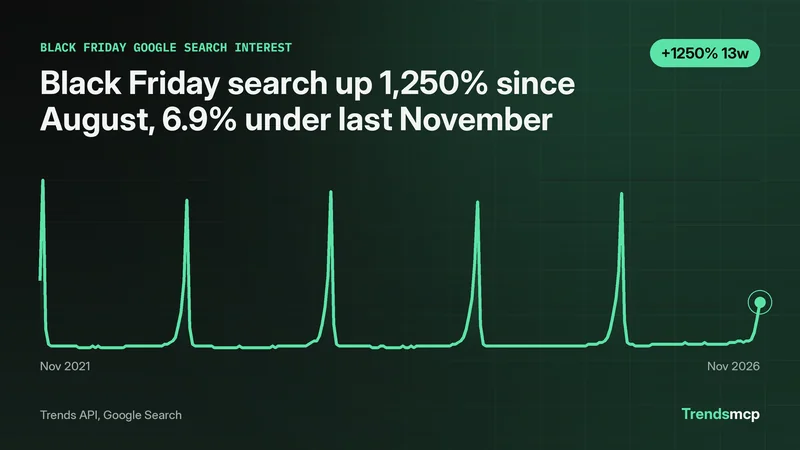
Over REST, the same body goes to https://api.trendsmcp.ai/api with a bearer key. The same call works for any seasonal term, so a whole planning list costs one request per term. The two windows answer different questions. The 3-month window asks whether the season has started. The 12-month window asks whether this season is stronger or weaker than the last one. A term can pass the first test and fail the second, which is exactly what Christmas tree does. The seasonal timing topic shows the same split for Black Friday and Christmas gifts, two holiday terms climbing on schedule at a lower level than last year.
Read the ramp against last year, not against zero
A percent rise means little without the base it rose from. Christmas tree climbed from 6 to 50 in three months, a 733% rise, but the index still reads below its 58 a year ago. The weekly series fills in the shape. September 5 read 9, September 26 read 18, November 7 read 36, and the two weeks after read 44, then 50. Last year's peak was 85, on December 6, 2025. The climb is steep, and the ceiling is still ahead.
The other four terms show the three other shapes a seasonal query can take:
| Keyword | 3 months | 12 months | Index now |
|---|---|---|---|
| Christmas tree | +733.33% (6 to 50) | -13.79% (58 to 50) | 50 on Nov 21 |
| Ski holidays | -9.3% (43 to 39) | -17.02% (47 to 39) | 39 on Nov 21 |
| Spring cleaning | -48.15% (27 to 14) | -26.32% (19 to 14) | 14 on Nov 21 |
| Mothers Day gifts | -50% (2 to 1) | 0% (1 to 1) | 1 on Nov 21 |
| Easter eggs | +16.67% (6 to 7) | +40% (5 to 7) | 7 on Nov 21 |
Ski holidays is the quiet warning. Treating November as the start of the winter ski season, the numbers read as a weak start: the term fell 9.3% in three months and sits 17.02% below last year. A planner who only watched the calendar would assume the ski season is arriving. That reads as demand arriving late and thin.
Spring cleaning and Mothers Day gifts are out of season, and the table shows the difference between a term resting and a term fading. Spring cleaning fell to 14 but sits only 26.32% below last year. Mothers Day gifts sits at 1, exactly where it sat a year ago. One reading is that both are dormant, not dead: each sits near the low level it held a year ago, which is what a term looks like between seasons.
Easter eggs is the low-base trap. It rose 40% year on year, the best 12-month figure in the table, but the index moved from 5 to 7. A 40% rise on a single-digit index reads as noise rather than momentum. Any percent change needs the index beside it, or a small base will look like a breakout.
Set the check date before the season starts
The calendar is the plan. Each term gets a season start, a first check date, and a decision the check feeds. The first check belongs at least one ramp cycle before the season, while the index is still near its floor. For a December term, that means September. Christmas tree moved from 9 to 18 across September, and by November 7 it had reached 36, more than two thirds of the way to its current level. A planner who first looked in November would be reading the ramp after most of it happened.
A one-page calendar built from the five terms above looks like this. The dates are recommended defaults, set one ramp cycle before each season, not dates the data produced:
| Term | Season | First check | Decision the check feeds |
|---|---|---|---|
| Christmas tree | December | Early September | Stock and content volume against last year's peak of 85 |
| Ski holidays | December to March | Early October | Whether to hold ski spend or shift it to a stronger winter term |
| Spring cleaning | March to April | Early January | When to start the spring content run |
| Mothers Day gifts | May | Early March | Whether the May spike still justifies a dedicated push |
| Easter eggs | April | Early February | Whether the term has any real volume before committing a slot |
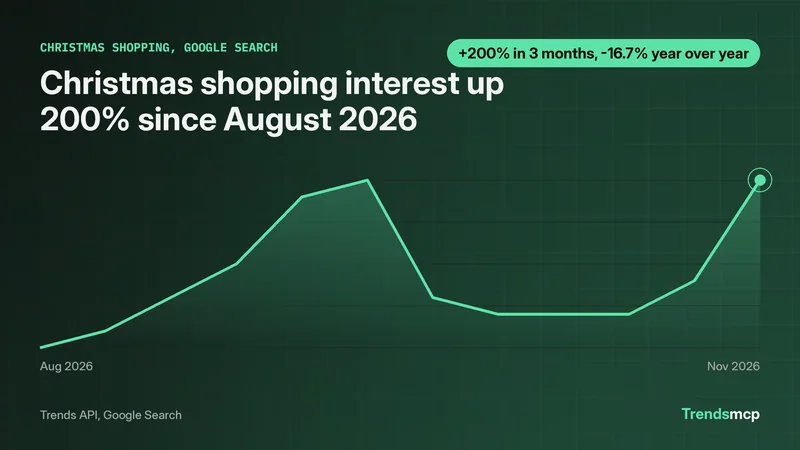
The check date matters more than the season date. The season date is public knowledge. The check date is when the plan can still change. The Christmas shopping report shows the same discipline applied to a whole category: the numbers were pulled while the season was still forming, not after it peaked.
Keep the list short and re-pull it
Start with five to ten terms: enough to cover a season, few enough to re-pull in one sitting. Re-pull the same two windows on each check date and record the index, not just the percent. The index is what the next comparison needs. Re-pull each term on its check date and keep only the terms whose season still shows up in the numbers.
The routine fits inside a normal research session. The same two-window call works from Claude, ChatGPT, or Cursor through the Trends MCP server, and the Claude trend research workflow shows how that session looks in practice. Pull the growth, read the ramp against last year, note the index, and set the next check date.